
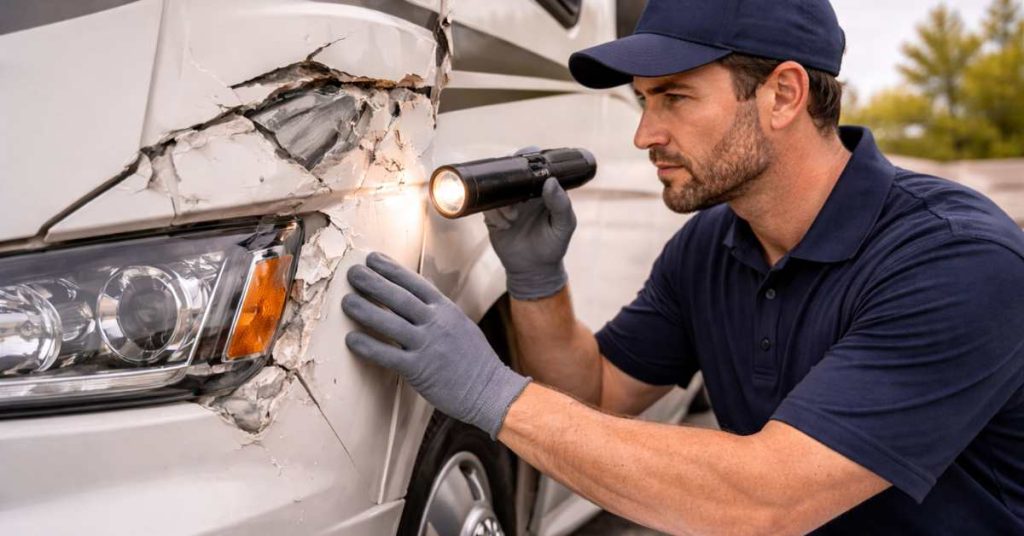
After a collision, your RV might look okay at first.
Maybe there’s a small dent. Maybe just a scratch. It’s easy to think, “That’s not a big deal.”
But with RVs, what you see on the surface isn’t always the full story.
Hidden damage is actually pretty common. And if you don’t catch it early, it can turn into much bigger (and more expensive) problems later on.
At RV Renovators in Mesa, we’ve worked on RVs for over 30 years. We’ve seen plenty of cases where minor-looking damage turned out to be something more serious underneath.
Let’s go over why that happens—and what to watch for.
Why RV Damage Isn’t Always Obvious
RVs aren’t built like regular vehicles.
Most exteriors use fiberglass panels, and those panels can hide damage really well.
When something hits your RV, the force doesn’t just stay in one spot. It spreads. That means damage can happen behind the surface where you can’t see it right away.
Sometimes, the signs don’t even show up until weeks later. You might notice cracks, bubbles, or soft spots long after the impact happened.
What Actually Happens to Fiberglass
Fiberglass is strong, but it has its limits.
After a collision, you might see small surface cracks or those spiderweb patterns in the finish. But underneath, the layers can start separating. That’s called delamination.
In some cases, the structure behind the fiberglass shifts slightly too. That kind of stress can lead to bigger issues if it’s not addressed.
Signs Something Isn’t Right
Even if everything looks fine at first, there are a few things you can check for.
If a wall feels soft or spongy when you press on it, that’s a red flag.
Bubbling or warping usually points to moisture or separation under the surface.
Hairline cracks might seem small, but they tend to grow over time.
And if you notice any water getting in where it shouldn’t, that’s something to deal with right away.
Why an Inspection Is Worth It
It’s easy to put this off, especially if the damage looks minor.
But catching issues early makes a big difference.
A proper inspection can stop small problems from spreading. It also helps protect the structure of your RV, which matters for both safety and long-term value.
And in most cases, fixing something early costs a lot less than waiting until it gets worse.
What Happens If You Ignore It
This is where things usually go sideways.
Once moisture gets in, it doesn’t just sit there. It spreads. That can lead to mold, rot, and more extensive damage behind the panels.
Delamination can also get worse over time, turning a small repair into a much larger one.
And if the damage becomes visible later, it can affect your RV’s resale value too.
What a Professional Inspection Looks Like
A good inspection goes beyond just looking at the surface.
Technicians will check for cracks, uneven areas, and signs of movement. They’ll also press on certain spots to see if anything feels weak or soft.
In some cases, they’ll use tools to detect issues you can’t see or feel.
At RV Renovators, the goal isn’t just to fix what’s obvious—it’s to find the root of the problem so it doesn’t come back later.
When You Should Get Your RV Checked
You don’t need to wait for obvious damage.
It’s a good idea to schedule an inspection after any collision, even if it seems minor.
The same goes for hitting road debris or anything that could’ve impacted the body.
And if you’re planning a long trip, a quick check can give you peace of mind before you hit the road.
Repair vs. Replacement
Not all damage means replacing entire panels.
Small cracks and chips can usually be repaired without much trouble.
If there’s some delamination, parts of the panel might need more work.
In more serious cases, full replacement could be the better option—but that’s not always necessary.
The key is knowing what you’re dealing with early on.
Why RV Repairs Need Experience
Working on RVs is different from standard auto repair.
Fiberglass requires specific techniques. Matching paint and finish takes skill. And understanding how everything is built underneath is just as important.
That’s why experience matters.
At RV Renovators, we handle everything from minor cosmetic fixes to major structural repairs, and we do it with the full picture in mind.
Dealing with Insurance
If your damage is from a collision, there’s a good chance insurance can help.
RV Renovators works with most major insurance companies and helps walk you through the process.
They also provide detailed estimates and documentation, which can make things move a lot smoother.
How to Reduce Future Damage
You can’t avoid everything, but a few habits help.
Be careful in tight spaces and around low branches.
Check your RV regularly for small issues.
And if you notice something off—even minor—get it looked at sooner rather than later.
Final Thoughts
After a collision, it’s easy to focus on what you can see.
But with RVs, the bigger problems are often hidden.
Taking the time to get a proper inspection can save you a lot of trouble down the road. It helps protect your RV, your investment, and your safety.
If something doesn’t feel right, it’s worth checking out.